Policing of Indigenous Bodies by Colonisers: Dialogues on Cultural Memory, Colonial Morality and Contemporary Media
Manufacturing Categories, Embodied Histories
Digital Global South Fellowship • C²DH • University of Luxembourg
2025
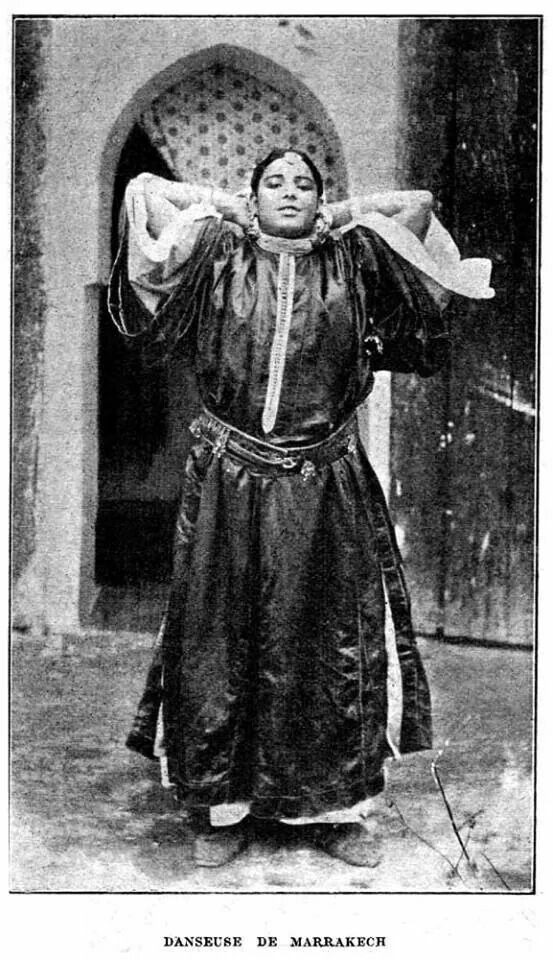


Knowledge Before Conquest
"The cultural effects of colonialism have too often been ignored or displaced into the inevitable logic of modernization and world capitalism; but more than this, it has not been sufficiently recognized that colonialism was itself a cultural project of control."
— Bernard S. Cohn, Colonialism and Its Forms of Knowledge (1996)
Before the first French soldier crossed into Morocco, before the British East India Company became the British Raj, there were the mapmakers, the surveyors, the ethnographers. Before conquest, colonialism began with classification.
This chapter traces how European powers built large archives of knowledge about the peoples they intended to rule. In both Morocco and India, colonial knowledge production was a deliberate strategy of control, rather than a neutral scientific endeavor.
The Ethnographic State: Morocco
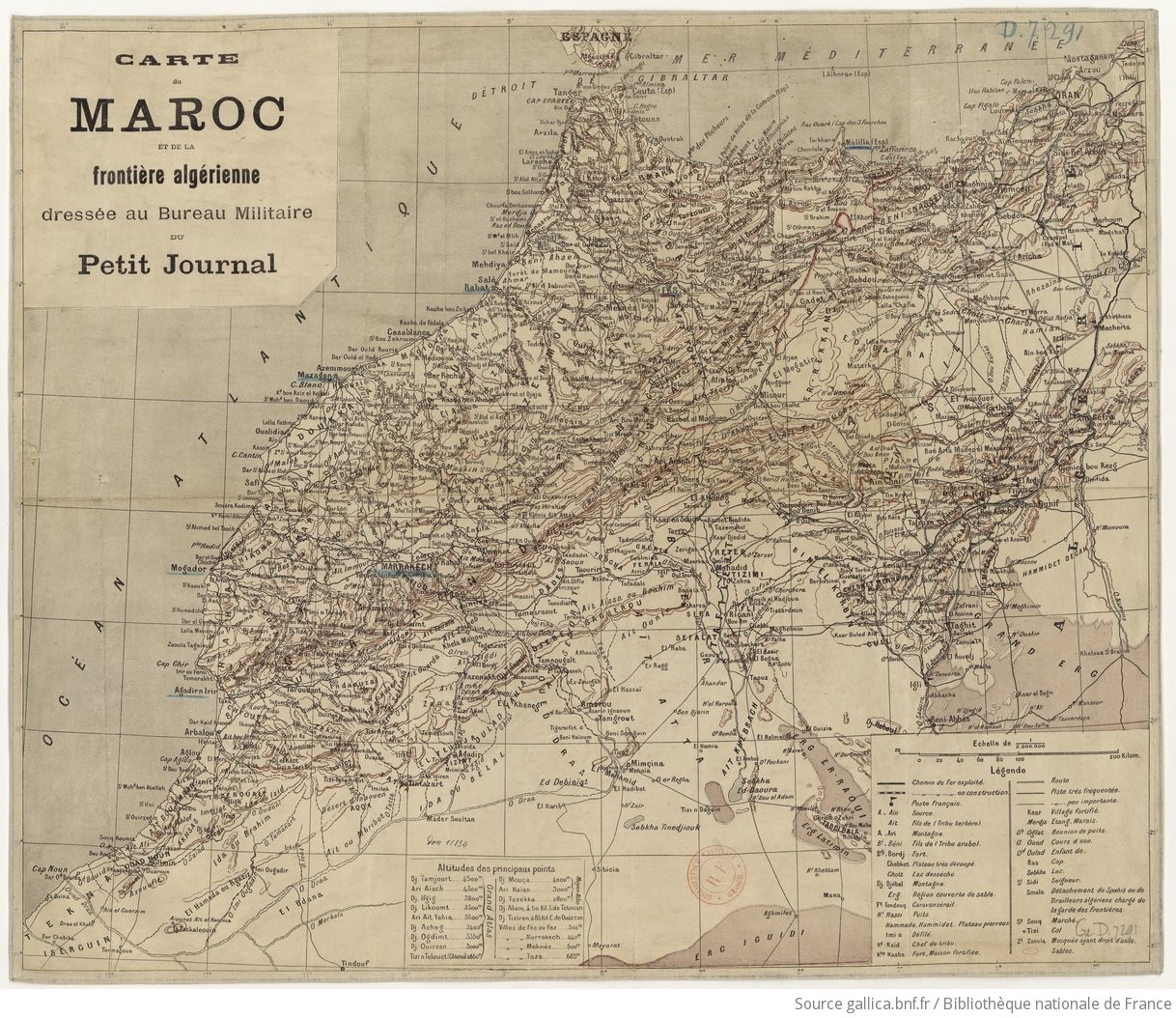
In 1903, nine years before France would establish its Protectorateالحمايةal-ḤimāyaFrench "protection" of Morocco (1912–1956) — colonial rule disguised as guardianship. over Morocco, the Mission Scientifique du Marocالبعثة العلميةMission ScientifiqueFrench scientific mission (1904–1912) that mapped Morocco's tribes, customs, and territories before conquest. was founded in Tangier. This institution, staffed by ethnographers, geographers, geologists, explorers and orientalists, had one purpose: to make Morocco legible to French administrators.
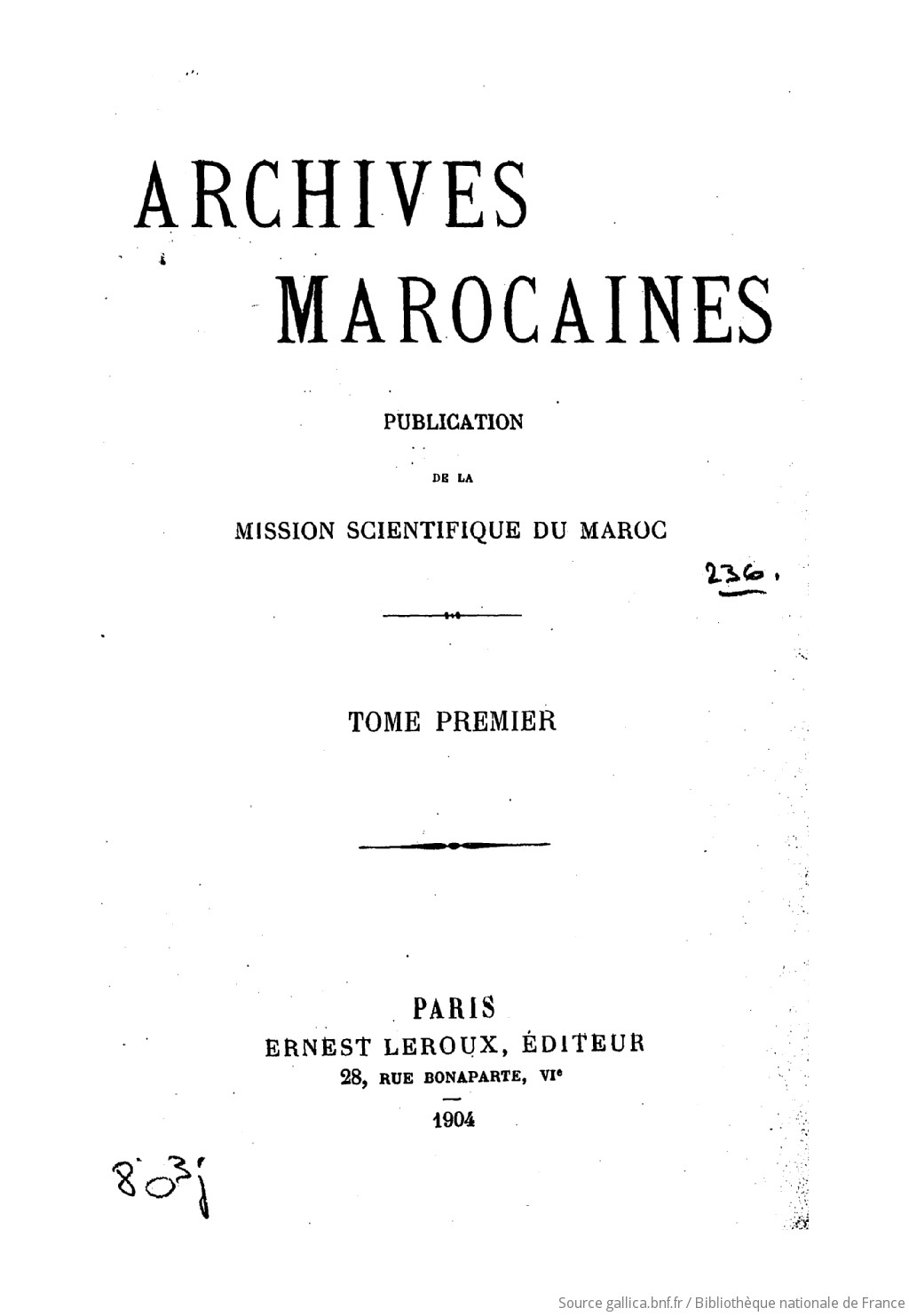
The Mission published in 1904 the journal Archives Marocaines, which systematically documented Moroccan tribes, religious practices, legal customs, and territorial boundaries. By 1912, when the Treaty of Fez formalized French control, the colonial administration possessed an extraordinary archive of information about a country it did not yet rule.
"A manifestation of French intellectual power about the Moroccan other, the colonial archive organized knowledge into categories based on then relevant assumptions, which over time could and did change."
— Edmund Burke III, The Ethnographic State: France and the Invention of Moroccan Islam, University of California Press, 2014
Major contributors to the French colonial archive on Morocco: Edmond Doutté (1867–1926), author of En Tribu (1914); Eugène Aubin, author of Le Maroc d'aujourd'hui (1904); and Alfred Le Chatelier, sociologist of Islam and founder of the Mission Scientifique.
Morocco: The Berber Dahir of 1930
On May 16, 1930, the French Residency in Morocco issued a royal decree—a dahirظهيرẒahīrRoyal decree issued by the Moroccan Sultan — under the Protectorate, often drafted by French administrators.—that would ignite the first mass nationalist movement in Moroccan history.
The Berber Dahir (Dahir Berbère) placed Berber-speaking tribes under French customary law and French judicial courts, removing them from the jurisdiction of Shariaالشريعةal-SharīʿaIslamic law derived from the Quran and Hadith — the Berber Dahir aimed to sever Berbers from this shared legal tradition. and the Sultan's religious authority. On its surface, the decree claimed to respect Berber "traditional customs." In practice, it aimed to sever Berbers from the Arab-Islamic identity that unified Morocco.
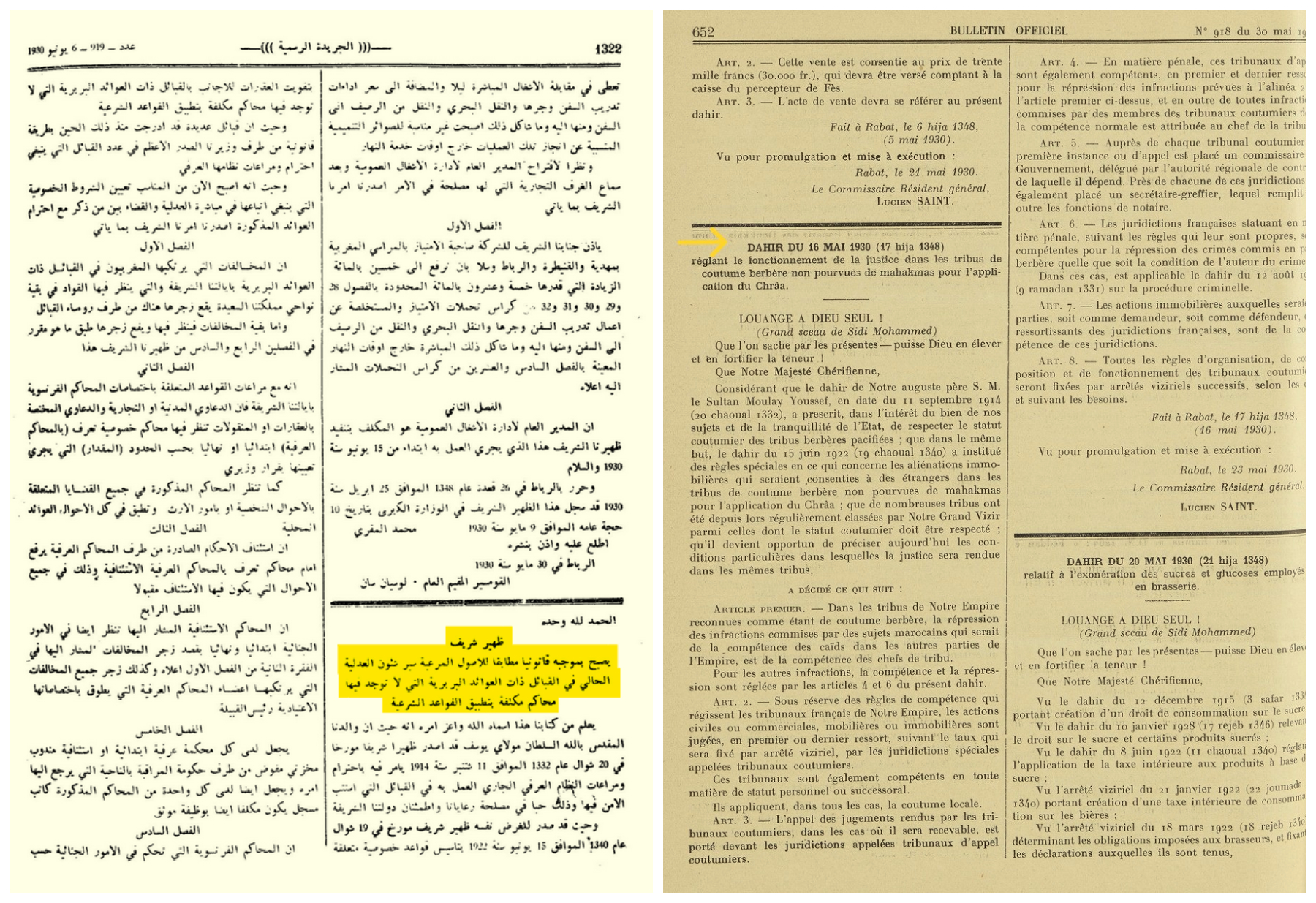
Source: Internet archive
The Berber Dahir, published in the "Bulletin Officiel du Protectorat de la République Française au Maroc", No. 918, May 23, 1930.
Source: Bibliothèque Diplomatique Numérique
The policy reflected decades of French politique berbèreالسياسة البربريةPolitique Berbère"Berber policy" — French colonial strategy to separate Berbers from Arabs, portraying them as closer to Europeans and less Muslim., which held that Berbers were racially and culturally distinct from Arabs—closer to Europeans, less attached to Islam, and therefore more amenable to French civilization.
"Passant par transitions souvent rapides des prescriptions d'un droit coutumier singulièrement primitif — bien que très vivant et merveilleusement adapté parfois aux circonstances économiques de l'existence — aux règles rigides établies par la législation sacrée du Coran, les Berbères voient ainsi se précipiter, après leur soumission, la ruine des traditions auxquelles ils sont secrètement le plus attachés."
Robert Montagne's Les Berbères et le Makhzen dans le Sud du Maroc (Paris: Félix Alcan, 1930), published the same year as the Dahir, provided ethnographic justification for separate Berber administration, presenting the Arab-Berber distinction as ancient and essential.
— Robert Montagne, Les Berbères et le Makhzen dans le Sud du Maroc, 1930
Education as Division
While the Dahir was the public face of division, the deeper work happened in secret. In an internal memo dated June 25, 1924, Marshal Lyautey stated the goal of separate Berber schools was to "tame the indigène, and to maintain—discreetly, but as firmly as possible—the linguistic, religious, and social differences that exist between the Arabized bled makhzenبلاد المخزنbilād al-makhzanTerritories under direct control of the Sultan's government. and the Berber mountains, which, while religious, are pagan and ignorant of Arabic."
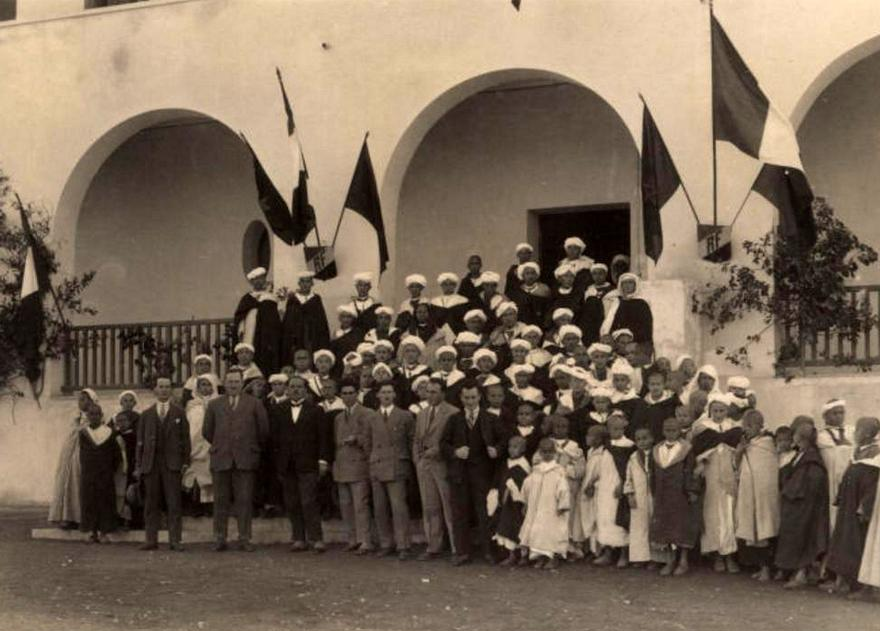
Source: dafina.net forums (lamgaz, 31 January 2015)
The flagship institution was the Collège Berbère d'Azrou, founded in 1927. French and Berber (in Latin script) served as languages of instruction, Arabic was prohibited. By 1950, 250 of Morocco's 350 official caïds were Azrou graduates.
Yet the strategy backfired. In February 1944, students at Azrou went on strike in solidarity with the nationalist movement: a direct refutation of the colonial logic that created their school. After independence, it was renamed Lycée Tarik ibn Ziyad, after the Amazigh general who led the Muslim conquest of Iberia.
The Colonial Construction of "Arab" versus "Berber"
French ethnographers constructed a "Berber Myth" (le mythe berbère), a sharp binary between "Arab" and "Berber" populations that mapped onto a moral hierarchy:
THE "BERBER" (Le Mythe Berbère)
- - Indigenous to North Africa, predating Arab "incursion." Linked to a "white race" — European types (Gauls, Germans)
- - Superficially Islamized, retaining "pagan" roots. Non-fanatical. Syncretic Islam (maraboutism, Sufi brotherhoods)
- - Customary law (izerf, qanouns) — judged "in harmony with French code"
- - Democratic, tribal, governed by councils (jama'at). Fiercely independent (bled al-siba)
- - "Eminent qualities": frank, loyal, hardworking, practical, honest, alert
- - Assimilable. Must be "protected" from Arabization and Islamization
THE "ARAB" (Le Gospel Colonial)
- - Invader from Arabia. Origins deemed "fanciful." Race perceived as Semitic
- - Fanatical Muslim. Islam as "negative," "obscurantist." Source of "contagion"
- - Islamic law (sharia)
- - Allied with Makhzan (central authority). Feudal structure, supporting powerful qaids
- - Lazy, slow, cold, dreamy
- - Resistant to progress. Source of "contamination"
This binary obscured reality. As early as 1901, Edmond Doutté called the Arab-Berber distinction "vain", noting that communities intermarried, many spoke both languages (Arabic and Amazigh), and nomadic and sedentary populations existed in both group. The distinction between Bled Makhzenبلاد المخزنBled al-MakhzenLands under central government authority. (lands under central authority) and Bled Sibaبلاد السيبةBled al-Siba"Land of dissidence" — areas outside central control, but not lawless. (lands outside central control) was similarly distorted as an eternal, racial divide rather than a shifting political relationship. Yet political expediency won: by 1919, the myth had transformed into official policy that justified the Berber Dahir a decade later.
Abdeljalil Lahjomri, in his book "Maroc des heures françaises", dismantles the "Berber Myth" element by element, presenting it as a colonial fabrication designed to fracture what was, in reality, a profoundly unified society.
— Abdeljalil Lahjomri, Maroc des heures françaises, 2019
India: Caste as Colonial Category
In India, the British did not invent caste, but they transformed it. What had been a fluid, regional, and contextual system of social organization became, under colonial rule, a rigid, enumerated, and all-India hierarchy.
The decennial census, beginning in 1871, required colonial administrators to classify every Indian by caste. This act of enumeration had profound consequences:
Fixing fluid categories: Local jatisசாதிJātiBirth group — occupational/kinship communities, often local and fluid. (occupational/kinship groups) were forced into standardized all-India varnaவர்ணம்VarnaThe four-fold textual classification — a Brahmanical ideal, not lived reality. categories.
Creating hierarchy: Herbert Hope Risley's 1901 Census ranked castes by "social precedence," creating official hierarchies where ambiguity had existed.
Enabling mobilization: Once caste became an official category, groups organized to improve their census ranking—making caste more politically salient than ever before.
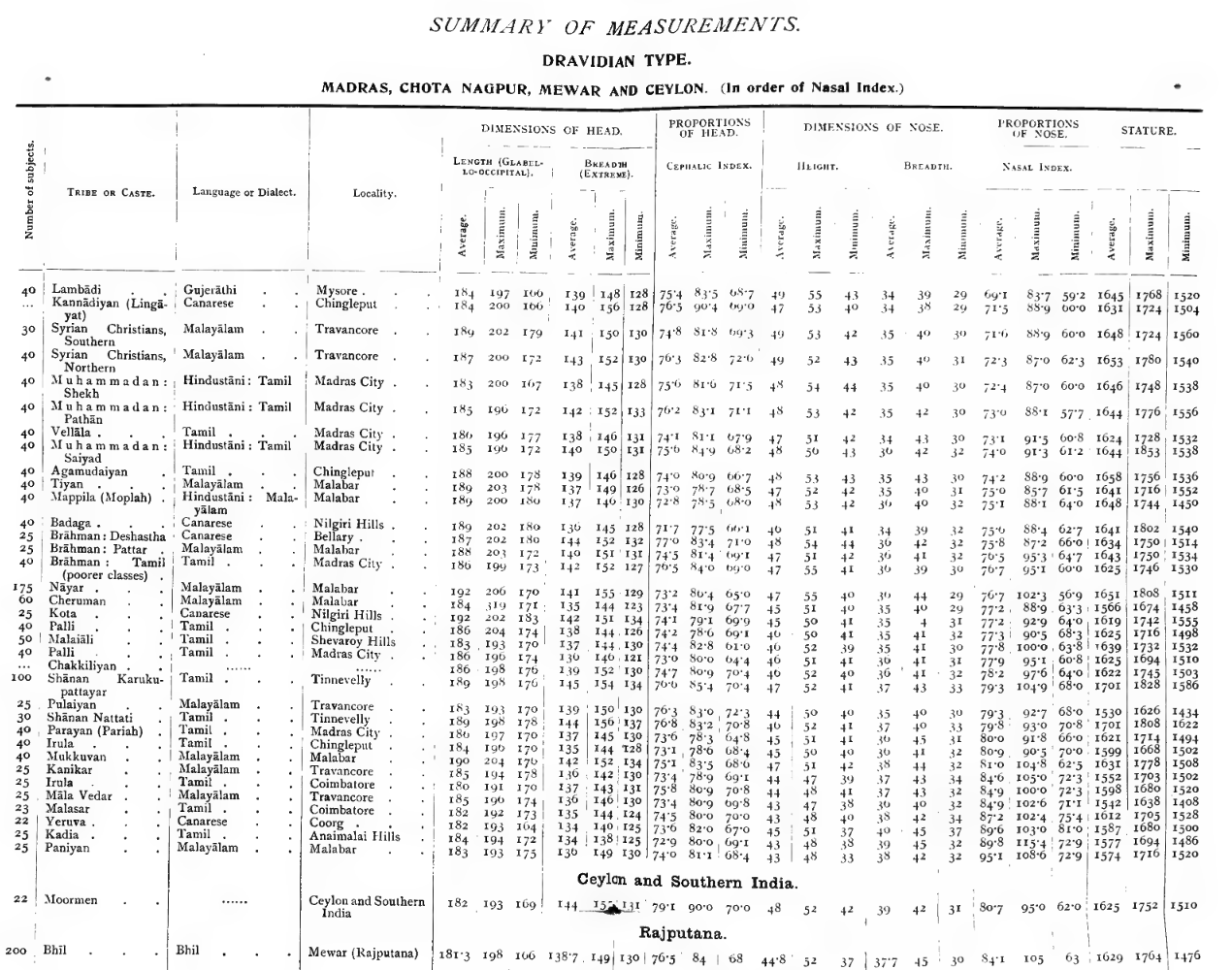
Source: H.H. Risley, The People of India, 1908
Herbert Hope Risley (1851–1911) was the most influential architect of colonial caste classification. As Census Commissioner for the 1901 Census, he implemented a system that ranked castes based on how much "respect" higher castes showed them—essentially codifying social prejudice as scientific fact. His work also incorporated anthropometric theories, using measurements like the "nasal index" to argue that caste distinctions reflected racial differences between "Aryan" and "Dravidian" populations.
Nicholas B. Dirks argues that caste as we know it today is substantially a colonial creation. British administrators, missionaries, and ethnographers made caste the central organizing principle of Indian society in ways that had not been true before colonial rule.
— Nicholas B. Dirks, Castes of Mind, Princeton UP, 2001
The "Martial Races" Theory
Beyond caste, British administrators developed the theory of martial racesபோர் இனங்கள்Martial RacesBritish theory that some Indian communities (Sikhs, Gurkhas, Pathans) were "naturally" warlike — a political fiction created after 1857.—the idea that some Indian communities were naturally warlike and loyal, while others were effeminate and untrustworthy.
After the 1857 Revolt1857 புரட்சிSepoy Mutiny / First War of IndependenceMajor uprising against British rule — called "Mutiny" by the British, "First War of Independence" by Indians., in which Bengali sepoys played a major role, the British restructured the Indian Army to favor Sikhs, Gurkhas, Pathans, and Punjabi Muslims—groups deemed "martial"—while excluding Bengalis, Marathas, and South Indians. The theory had no scientific basis. It was a political response to 1857, designed to recruit from communities considered loyal and exclude those considered dangerous.
Parallel Strategies, Parallel Consequences
The French in Morocco and the British in India pursued strikingly similar divide-and-rule strategies:
MOROCCO
- — Arab vs. Berber
- — Berbers as "less Muslim"
- — Berber Dahir (1930): separate legal systems
- — Bled Makhzen vs. Bled Siba as eternal divide
INDIA
- — Hindu vs. Muslim
- — "Martial races" as more loyal
- — Separate electorates (1909): separate political systems
- — Caste as unchanging essence
In both cases, colonial administrators took fluid, contextual identities and fixed them into rigid categories. These categories were presented as ancient and natural, obscuring their recent, political origins. The categories created real consequences—legal, economic, social—that made them self-fulfilling.
Colonial categories created what Arjun Appadurai has called "enumerated communities"—groups that became conscious of themselves as groups precisely through the process of being counted and classified.
— Arjun Appadurai, "Number in the Colonial Imagination," in Orientalism and the Postcolonial Predicament, 1993
Berber Dahir. Bulletin Officiel du Protectorat, No. 918, May 23, 1930.
Dirks, Nicholas B. Castes of Mind. Princeton UP, 2001.
Risley, H.H. The People of India. Thacker, Spink & Co., 1908.
Montagne, Robert. Les Berbères et le Makhzen. Félix Alcan, 1930.
Laroui, Abdallah. The History of the Maghrib. Princeton UP, 1977.
Bayly, Susan. Caste, Society and Politics in India. Cambridge UP, 1999.
Resistance & Bodies
"The colonized is elevated above his jungle status in proportion to his adoption of the mother country's cultural standards."
— Frantz Fanon, Black Skin, White Masks (1952)
Colonial rule classified territories and populations. It also classified bodies. Across Morocco and India, European administrators encountered communities who threatened colonial control, and female performers whose art intertwined the sacred and the sensual. Both became targets.
This chapter traces two forms of colonial intervention and their unintended consequences. First, strategies of division that often achieved the opposite of their intent: by attempting to sever communities from shared identities, colonial powers inadvertently created conditions for mass mobilization. Second, colonial morality campaigns that targeted bodies, particularly women's bodies, that defied European categories of respectability. In Morocco, the Shikhate who sang resistance were imprisoned, tortured, silenced. In India, the Devadasis who danced devotion were abolished by law.
Morocco: The Ya Latif Protests (1930)
The Berber Dahir ignited the first mass nationalist movement in Moroccan history. Within weeks, protests erupted across the country through collective recitation of the Latif Prayer in mosques. Ya Latifيا لطيفYā Laṭīf"O Gentle One" — one of the 99 names of God in Islam, invoked in the 1930 protests., "O Gentle One," is traditionally invoked in times of calamity.
يا لطيف، نسألك اللطف فيما جرت به المقادير، لا تفرق بيننا وبين إخواننا البرابر
"O Gentle One, we ask Your gentleness in what fate has decreed.
Do not separate us from our Berber brothers."
— The Latif Prayer, recited in Moroccan mosques, 1930
By framing resistance as religious supplication, Moroccan nationalists united Arab and Berber Muslims, made repression difficult, and mobilized women and the uneducated through mosque networks. By 1934, France was forced to rescind the most divisive provisions.
Key Figures in Moroccan Nationalism
Allal al-Fassiعلال الفاسيʿAllāl al-Fāsī(1910–1974) Founder of Moroccan nationalism, later leader of the Istiqlal (Independence) Party. (1910–1974): One of the founders of Moroccan nationalism, later leader of the Istiqlalالاستقلالal-Istiqlāl"Independence" — Moroccan nationalist party founded in 1944, emerged from the 1930 protests. (Independence) Party. Al-Fassi was arrested multiple times for his role in organizing resistance.
Mohammed Hassan al-Ouazzani (1910–1978): Journalist and nationalist leader who helped publicize the Dahir crisis internationally.
Ahmed Balafrej (1908–1990): Co-founder of the nationalist movement who helped organize the Paris-based protests.
India: The Devadasis
The word DevadasiதேவதாசிTēvatāci"Servant of god" — women dedicated to temples, custodians of classical dance. means "servant of god." For centuries, devadasis were women ritually dedicated to Hindu temples, where they performed sacred dances, maintained temple grounds, and served as custodians of classical arts.
Devadasis occupied a complex social position. Ritually married to the deity, they were nityasumangaliநித்யசுமங்கலிNityasumaṅgalī"Ever-auspicious woman" — a devadasi could never be widowed, as her divine husband was immortal., "ever-auspicious" women who could never be widowed. Their dance, Sadhirசதிர்SadirOriginal temple dance tradition, later renamed Bharatanatyam., incorporated Shringaraசிருங்காரம்ŚṛṅgāraThe erotic sentiment — in temple context, devotion expressed through divine love., the erotic sentiment, as an essential aesthetic component. In Hindu temple theology, erotic devotion to the deity was sacred.
Saskia Kersenboom's foundational study documents how devadasis were ritual specialists whose presence was essential to temple function. Their "ever-auspicious" status made them indispensable for ceremonies where widows were forbidden.
— Saskia Kersenboom, Nityasumangali: Devadasi Tradition in South India, 1987
The Anti-Nautch Movement
British missionaries and colonial administrators viewed devadasi traditions through Victorian sexual morality. What they saw scandalized them: women dancing in temples, women outside marriage, women whose art celebrated erotic sentiment.
The Anti-Nautch Movement emerged in the 1890s, led by an alliance of British missionaries and Indian social reformers. Nautchநாட்ச்NautchFrom Hindi "nāch" (dance) — term of disapproval applied to Indian dance traditions by the Anti-Nautch movement. (from Hindi nāch, meaning dance) became a term of disapproval applied to all Indian dance traditions.
"These nautch parties have the effect of lowering
the English character in the eyes of the natives."
— Anti-Nautch petition to the Governor of Madras, 1893
The movement framed devadasis as prostitutes, erasing distinctions between sacred performance and sex work. Dr. Muthulakshmi Reddi (1886–1968), the first woman legislator in British India, led the campaign for abolition. Her Madras Devadasi (Prevention of Dedication) Act passed in 1947, criminalizing temple dedication and effectively abolishing the institution.
Davesh Soneji documents how devadasi families experienced abolition as loss, not liberation. Loss of livelihood, status, and artistic tradition. His oral histories reveal women who remember being told their entire way of life was now criminal.
— Davesh Soneji, Unfinished Gestures, University of Chicago Press, 2012
Morocco: The Shikhate
The Shikhateالشيخاتal-ShīkhātProfessional female singer-dancers of Morocco, practitioners of Aïta poetry. Custodians of oral tradition, stigmatized under colonial and reformist morality. (singular: Shikha) are professional female singer-dancers of Morocco, practitioners of Aïtaالعيطةal-ʿAyṭa"The cry" — Moroccan oral poetry tradition performed at festivals. Themes include love, loss, social commentary, and resistance., a genre of oral poetry called "the cry of the Moroccan land."
Aïta originated as rural folk poetry performed at festivals, weddings, and community gatherings. Its themes include love, loss, social commentary, and resistance. During the colonial period, Shikhate performed songs encoding anticolonial sentiment. This made them dangerous.
The French recognized the mobilizing power of Aïta. Their response was strategic degradation.
"During colonialism, the French wanted to get rid of the ʿaita because it could mobilize people, carry the nationalist message everywhere. It was the French that during the Protectorate created brothels where soldiers could be entertained by the shikhat. That is how the poetic language of the ʿaita changed from a language of the people to an erotic language associated with alcohol and prostitution."
— Mohammed Bouhmid, scholar of Aïta tradition, cited by Alessandra Ciucci in “De-orientalizing the ʿAita and Re-orienting the Shikhat”, 2010.
This was policy, not only passive stigmatization: contain the tradition by corrupting its context, transform poets into entertainers for soldiers, sever the link between performer and community. Pasha Thami al-Glaouiالتهامي الكلاويal-Thāmī al-Glāwī(1879–1956) Pasha of Marrakech and French collaborator. Helped orchestrate Mohammed V's exile in 1953. of Marrakech made this explicit by administratively grouping shikhate with sex workers in the same quarter (ماخور عرصة الحوتة), deliberately conflating the two professions.
Voices of Resistance: The Shikhate Who Fought Back
Yet the Shikhate resisted. Their names deserve remembering:
Shikha Kharbouaa (خربوعة), born Zahra al-Hamdi in 1929, was a master of Aïta Zaïriya. In 1953, she improvised a song denouncing Mohammed V's exile to Madagascar. She was arrested and imprisoned in five different prisons: Rommani, Oued Zem, Khouribga, Ben Ahmed, and finally a full year in Casablanca's Ghbila prison. She was released only after the King's return, in a general amnesty for "prisoners of conscience." She died in poverty in 2017, having spent her final years in charity queues.
— Al Akhbar, "الشيخات بين الأمس واليوم"
Hajja al-Hamdawiya (الحمداوية) was repeatedly arrested for songs inciting resistance. After every performance, she was summoned for interrogation about the meanings behind her lyrics. Her song "الشيباني" (The Old Man), with its line "آش جاب لينا حتى بليتينا" ("What brought him to us until he ruined us"), was interpreted as mocking Ben Arafa, the puppet sultan France installed after exiling Mohammed V. She was imprisoned and tortured for these words.
— Al Akhbar, "الشيخات بين الأمس واليوم"
Shikha Kharboucha (خربوشة), also called Hadda "Lkerda," composed poetry inciting her tribe, Oulad Zaid, to rebel against Caid Aissa Ben Omar. She was captured through a trap and imprisoned in his fortress. From her cell, she composed: "الليلة العذاب أبابا ونقاسي.. الدنيا تفوت أبابا نقاسي.. آخرها موت" ("Tonight the torture, father, I suffer... Life passes, father, I suffer... Its end is death"). According to oral histories, her tongue was cut out before she was killed.
— Al Akhbar, citing researcher Mustafa Lotfi
Al-Niria (النيرية), born Mbaraka bint Hammu al-Bahishiya, composed "الشجعان" (The Heroes), a battle anthem for resistance fighters in Tadla and Beni Mellal. She rode horseback carrying henna water: any fighter who retreated was splashed, marking him as a coward before his tribe. Men preferred death in battle to returning home stained with her henna. The French prosecuted her for inciting resistance, yet she never received official recognition as a member of the resistance.
— Al Akhbar, citing researcher Mohammed Boukhar
The Colonial Gaze
French musicologist Alexis Chottin captured the colonial attitude toward Shikhate performance in 1928:
"Nous allons connaître le Maroc libertin et jouisseur. Ce 'visage' est agréable à regarder, mais que de fard sur les joues, que de khôl sous les yeux… Et j'ai bien peur, hélas! que là-dessous il n'y ait qu'une pauvre et menue figure, pâlotte et fripée de viveur… Ce rire et cette joie fusent et éclatent dans le rythme, rythme étourdissant, rythme enchanteur qui endort les soucis et les peines; rythme-vampire dont les ailes s'agitent pour anesthésier la douleur causée par sa morsure fatale."
— Alexis Chottin, "Les visages" de la musique marocaine, 1928
The passage shows the colonial double bind: fascination and condemnation intertwined. Morocco "libertin et jouisseur." The makeup, the kohl, the jewelry dismissed as concealing "une pauvre et menue figure." The rhythm simultaneously "enchanteur" and "vampire." Chottin cannot look away, yet frames his gaze as moral warning. This same musicologist would later classify Aïta as "vulgar" and Andalusian music as "refined," dressing colonial hierarchy in the language of scholarship.
Parallel Patterns
Despite vast differences in religious context, the Devadasi and Shikhate faced strikingly similar fates:
DEVADASI (INDIA)
- • Temple dancers, "servants of god"
- • Ritually married to deity
- • Economically independent
- • Custodians of Sadhir dance
- • Targeted by Anti-Nautch movement
- • Legally abolished (1947)
- • Term became slur: "Thevadiya"
SHIKHATE (MOROCCO)
- • Festival performers, poets of Aïta
- • Outside conventional marriage
- • Economically independent
- • Custodians of oral poetry
- • Targeted by colonial/reformist morality
- • Imprisoned, tortured, killed
- • Term became insult in Darija
The Sacred and the Sensual
Both traditions challenge a distinction Victorian morality took for granted: the separation of sacred from sensual. In Hindu temple theology, erotic devotion (bhakti infused with shringara) was a legitimate path to the divine. The poet-saint Andalஆண்டாள்Āṇṭāḷ8th-century Tamil poet-saint who wrote passionate love poetry addressed to Vishnu. Her works are still recited in temples today. (8th century) wrote passionate love poetry to Vishnu, poetry still recited in temples today. In Moroccan Sufi tradition, ecstatic practices including music and dance were pathways to divine experience.
Colonial morality could not accommodate these traditions. The dancing body was either sacred OR sensual, never both. By imposing this binary, colonialism fundamentally altered indigenous relationships to art, spirituality, and the body.
Soneji, Davesh. Unfinished Gestures. University of Chicago Press, 2012.
Kersenboom, Saskia. Nityasumangali. Motilal Banarsidass, 1987.
Ciucci, Alessandra. De-orientalizing the ʿAita and Re-orienting the Shikhat. Cambridge Scholars Press, 2010.
Chottin, Alexis. "Les visages" de la musique marocaine. Imprimerie Nouvelle, 1928.
Basri, Hassan. الشيخات بين الأمس واليوم عندما كانت الشيخة رمزا لمعارضة . Al Akhbar, 2022.
Afterlives
"It's essentially an upper-caste woman appropriating the arts and culture of lower-caste women and taking ownership of the dance form."
— Abirami
Colonialism did not only suppress indigenous arts—it transformed them. Traditional practices were subjected to "sanitization": removal of elements deemed immoral by colonial and nationalist elites. And colonial categories did not end with independence—they were inherited, institutionalized, and internalized.
From Sadhir to Bharatanatyam
In the 1930s, as the Anti-Nautch movement stigmatized devadasi traditions, Rukmini Devi Arundale (1904–1986) founded Kalakshetraகலாக்ஷேத்ராKalākṣetra"Temple of art" — institution that became the center of "classical" Bharatanatyam. (1936), transforming temple dance into concert spectacle. The Sanskrit name Bharatanatyamபரதநாட்டியம்Bharatanāṭyam"Classical" dance created from Sadhir in the 1930s–40s, erasing Tamil devadasi origins. erased Tamil devadasi origins.
SADHIR (DEVADASI)
- — Performed in temples
- — Ritual/devotional function
- — Hereditary practice
- — Shringara (erotic) central
- — Addressed to the deity
BHARATANATYAM (REVIVAL)
- — Performed on stages
- — Aesthetic/cultural function
- — Taught to upper-caste women
- — Shringara minimized
- — Addressed to audience
In Morocco, Alexis Chottin's colonial taxonomy—Andalusian as "classical," Aïta as "folk"—was adopted by the postcolonial state. Conservatories preserve al-Ālaالآلةal-ĀlaAndalusian classical music, elevated as Morocco's "refined" tradition.; Aïta remains marginalized.
Internalized Shame
More insidious than nostalgia is the internalization of colonial value systems. In both Morocco and India, colonial languages (French, English) retained prestige after independence.
"The colonized is elevated above his jungle status in proportion
to his adoption of the mother country's cultural standards."
— Frantz Fanon, Black Skin, White Masks (1952)
The shame attached to Shikhate and devadasi traditions did not end with colonialism. Families continue to hide this heritage. The slurs derived from these traditions carry colonial moral judgments into the present.
Fanon, Frantz. Black Skin, White Masks. 1952.
Meduri, Avanthi. "Bharatha Natyam—What Are You?" Asian Theatre Journal, 1988.
Alloula, Malek. The Colonial Harem. 1986.
Digital Echoes
"When you type 'Devadasi' on YouTube, you'll get resources. Type the contemporary term—nothing. It's censored."
— Abirami
Colonial categories do not merely persist—they proliferate. In the digital age, slurs derived from colonial-era stigmatization spread across platforms, amplified by algorithms designed to maximize engagement.
From Honorific to Slur
TAMIL
தேவதாசி
Devadasi — "Servant of God"
↓
Colonial stigmatization
Anti-Nautch movement (1890s)
Abolition Act (1947)
↓
தேவடியா
Thevadiya — common slur
MOROCCAN ARABIC
شيخة
Shikha — "Woman of knowledge"
↓
Colonial + reformist stigmatization
Urban/rural divide
20th century marginalization
↓
شيخة
Shikha — insult in Darija
Tamil: "Thevadiya" (தேவடியா) is now one of the most common slurs in Tamil. Most speakers are unaware they perpetuate colonial moral judgments every time they deploy it.
Moroccan Arabic: To call a woman "Shikha" today is to impugn her morality—the honorific transformed into weapon.
Who Profits from Colonial Categories?
Platforms profit from engagement. Content that provokes shame drives engagement. Colonial categories—with their capacity to wound—are profitable even as they harm users. Content moderation systems, trained primarily on English, miss slurs in Tamil, Darija, and other languages.
Reclaiming Digital Space
Social media also enables counter-narratives—scholars and artists sharing accurate histories. Community building—diaspora connecting across distances. Artistic reclamation—musicians celebrating traditions that were stigmatized. Hashtag activism—marginalized voices speaking back to power.
Sambasivan, N., et al. "Gender and Digital Abuse in South Asia." CHI, 2019.
Equality Labs. Caste in the United States. 2018.
The Body is a Festival
"El cuerpo es una fiesta."
— Eduardo Galeano
This exhibition has traced a history of manufactured, imposed, inherited shame . But shame is not the end of the story.
Across Morocco and India, artists, scholars and communities are reclaiming traditions that colonialism sought to erase. The Shikhate still perform. Dancers still move. The body, despite everything, remains a site of joy.
This epilogue is not a conclusion but an opening toward futures in which colonial categories no longer define what is sacred, what is art or what is worthy of interest.

Reclamation
Morocco: The Aïta Lives
The Aïta tradition never died. Despite marginalization, despite stigma, the Shikhate continue to perform at festivals and celebrations across rural Morocco. Today, a new generation of scholars and artists is working to document, preserve, and celebrate this tradition.
The stigma has not disappeared. But it is contested. Women who perform Aïta today do so in a context where their art is increasingly recognized as heritage.
India: Dancing Forward
The descendants of devadasi communities continue to navigate complex legacies. Some have reclaimed dance, performing traditions their grandmothers were forbidden to practice. Others have become scholars, documenting histories that were nearly erased.
Contemporary Bharatanatyam dancers increasingly acknowledge the devadasi origins of their art. Some seek out surviving practitioners from hereditary communities, learning repertoire that the "revival" had sanitized away. The dance scholar Nrithya Pillai, herself from a devadasi lineage, performs and teaches in ways that honor rather than erase her community's contributions.
The Work of Memory
This exhibition is itself an act of memory-work. By placing Moroccan and Indian histories side by side, we expose patterns that might otherwise remain invisible. By naming colonial violence, we refuse to let it pass as natural or inevitable.
But memory-work is never complete. Archives remain fragmentary. Voices remain missing. The women at the center of these histories, the devadasis who danced, the shikhate who sang, left few records in their own words. We reconstruct their lives from the records of those who sought to reform, abolish, or classify them.
This exhibition honors their presence while acknowledging its limits. We cannot speak for them. We can only work to ensure their stories are not forgotten.
What We Owe
What do we owe to histories of harm?
Acknowledgment: The first step is naming what happened. Colonial categories were not natural. Shame was manufactured. Traditions were suppressed, transformed, and stigmatized through deliberate policy.
Restitution: Archives held in former colonial capitals should be accessible to the communities whose histories they contain. Cultural heritage should be returned.
Transformation: The slurs that circulate in everyday language carry colonial violence. Every time we use "Thevadiya" or deploy "Shikha" as an insult, we perpetuate that violence. Language can change. Categories can be refused.
Celebration: The traditions that colonialism tried to destroy deserve celebration, not as museum pieces, but as living arts. The Shikhate deserve recognition as poets and artists. The devadasi legacy deserves honor, not shame.
About This Exhibition
Policing Native Bodies emerged from a collaboration between two researchers working across colonial histories. We came to this project from different places, different languages, different colonial contexts. What we found was parallels: the same logics of classification, the same targeting of female performers, the same transformation of honor into shame.
By placing these histories together, we hope to reveal the structures that connect them, and to imagine futures beyond colonial categories.
Digital Global South Fellowship 2025
Centre for Contemporary and Digital History (C²DH)
University of Luxembourg
The Researchers Behind This Archive
Ferdaous Affan
Morocco → University of Luxembourg
"This work of deconstruction, of trying to be aware of this internalized hatred towards your own identity and culture—it is such huge work one has to do on oneself."
PhD Researcher, C²DH
Computational analysis of colonial propaganda using LLMs
LinkedIn Profile
Abirami Raveendranath
Tamil Nadu, India
"There was a period in my life where I so desperately wanted English to be my mother tongue. That is so sad. Tamil is such a beautiful language."
Digital Global South Fellow 2025
Sociologist, Literary Scholar
LinkedIn Profile